When should I rent a 3/4" air hose instead of a standard 3/8" or 1/2" hose?+
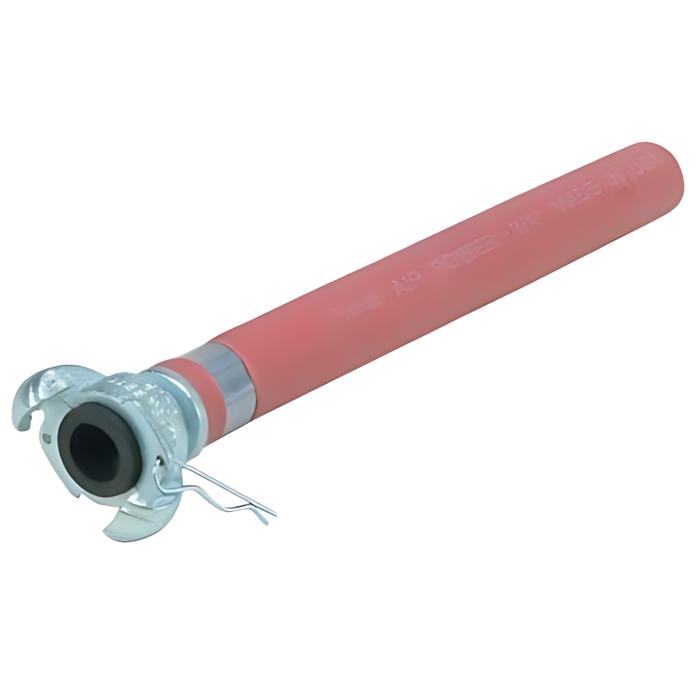
This 3/4" diameter air hose provides the high airflow volume (CFM) required by heavy-duty pneumatic equipment without significant line pressure loss. This is commonly used for: running 60 lb to 90 lb pneumatic pavement breakers; operating pneumatic rock drills and rivet busters; feeding portable sandblasting pots; blow-clearing commercial irrigation and utility lines; supplying multi-tool air distribution manifolds. For light tools such as framing nailers or small air ratchets, a standard 3/8" hose is much lighter and easier to maneuver.
What type of fittings are installed on this air hose?+
These 3/4" contractor air hoses are equipped with universal two-lug claw couplings, commonly known as Chicago or crowfoot fittings. They lock securely with a quarter-turn push-and-twist motion to connect directly to commercial compressors and heavy pneumatic tools. If your tool or compressor uses threaded NPT connections, ask our team for the appropriate claw-to-pipe adapter.
Can I connect multiple 50-foot air hoses together for longer reach?+
Yes, because universal claw couplings mate directly with one another, you can couple multiple 50-foot sections together to reach your work area. However, keep in mind that running several hundred feet of hose causes cumulative pressure drop under high air consumption. For best tool performance, place the compressor as close to the workspace as practical.
Will this 3/4" air hose work with small portable electric compressors?+
No, small residential or trim compressors (delivering 2 to 6 CFM) generally use 1/4" quick-disconnect couplers and do not produce enough volume to drive tools that require a 3/4" line. This hose is specifically designed for towable diesel compressors (such as 100 to 185 CFM units) or high-capacity plant air systems.
Should I hook this 3/4" hose directly to a handheld breaker or chipping hammer?+
While direct connection is possible, operators often prefer using an 8- to 10-foot flexible whip hose and an inline lubricator between the main 3/4" hose and the tool. The smaller whip hose dampens high vibration, reduces operator wrist strain, and extends the lifespan of the fittings. Heavy pneumatic tools also require daily inline oiling to prevent premature piston and cylinder wear.
More in Air Compressor & Generator RentalsView all 33 →